
Arjun Agrawal
Political Studies & Global Affairs
Knowledge. Insight. Impact.
Arjun AgrawalPolitical Studies & Global Affairs
Politics shapes the world.Understanding it changes how you see it.
An academic learning environment exploring political ideas, constitutional institutions, international relationships and the forces shaping the contemporary world.
Understand power. Question politics. Interpret the world.

01Academic pathways
Four pathways, one discipline
Each pathway keeps its own syllabus, depth and assessment. They meet in the Knowledge Atlas, where a concept, a thinker or an article of the Constitution is studied once and read through every course that needs it.
01UPSC CSE · GS-II and Prelims
Indian Polity & Governance
Understand India's constitutional framework, political institutions, governance and democratic processes: what the text says, how the courts have read it, and how institutions actually work.
“We, the people of India”: the Preamble’s opening words, where the authority of every institution on this pathway begins.
- Constitutional foundations
- Fundamental Rights and the Basic Structure
- Parliament, Executive and Judiciary
- Federalism and local government
- Governance and social justice
- Constitution Explorer
02UPSC CSE · GS-II
International Relations
Understand India's foreign policy, its strategic partnerships, its neighbourhood and the changing global order, through relationships, institutions and doctrines rather than disconnected country notes.
- India's neighbourhood
- Major powers
- Regional and global groupings
- Doctrines of Indian foreign policy
- Strategic and contemporary issues
- India and the World map
Boundaries from Natural Earth’s India point-of-view data; approximate at this scale. Lines join New Delhi to the neighbouring capitals; they show relationships, not routes.
03UPSC CSE · Optional subject
PSIR Optional
Develop a rigorous understanding of political theory, political thought, comparative politics and international relations, with the arguments, critics and Indian applications that distinguish a strong answer.
Who should rule, and why should anyone obey?
- Paper I · Political theory and Indian politics
- Paper II · Comparative politics and IR
- Western Political Thought
- Indian Political Thought
- Political Thinkers Atlas
- Thinker Comparison Lab
04IB Diploma Programme · First assessment 2026
IB Global Politics
Explore power, sovereignty, legitimacy and interdependence, and carry them through rights and justice, development and sustainability, and peace and conflict, as the course itself is designed.
- Course Explorer
- The four key concepts
- Thematic studies
- HL: Global political challenges
- Assessment preparation
- Original handbooks
- Rights and justice
- Development and sustainability
- Peace and conflict
At HL, extended inquiries into global political challenges: borders, environment, equality, health, identity, poverty, security, technology.
02The week in political studies
Four ways in, changing every week
A political insight, an article of the Constitution in its official words, a thinker and a case study: each a short way into a larger part of the platform.
Political insight of the weekConcept
Four meanings of sovereignty
Jean Bodin defined sovereignty in 1576 as the absolute and perpetual power of a commonwealth, and the word has never since meant only one thing. Stephen Krasner's Sovereignty: Organized Hypocrisy (1999) separates four uses: domestic sovereignty, the effective authority of a government at home; interdependence sovereignty, control over flows across borders; international legal sovereignty, recognition by other…
Follow the ideaConstitutional feature · Part VI
ARTICLE 176
Special address by the Governor
Official text
(1) At the commencement of [the first session after each general election to the Legislative Assembly and at the commencement of the first session of each year], the Governor shall address the Legislative Assembly or, in the case of a State having a Legislative Council, both Houses assembled…The article, its amendments and judgments
Thinker of the week
Sri Aurobindo
1872–1950 · Colonial India: Swadeshi and after
Sri Aurobindo (1872–1950), born Aurobindo Ghose in Calcutta, was educated in England, became one of the most radical leaders of the Swadeshi movement in Bengal, and then withdrew from politics to become a philosopher and spiritual teacher in Pondicherry. In his political years, 1905 to 1910, he…
Read: New Lamps for Old (1893–94)
The profile, debates and comparisonsFeatured case study · IB Global Politics
The South China Sea arbitration and its aftermath
A 2016 tribunal under the Law of the Sea Convention rejected China’s expansive maritime claims; a decade later the award stands in law, is rejected by Beijing and is contested on the water.
Read the case, its actors and its concepts03 · Current analysis
The Global Political Briefing
International RelationsConflicts and securityPSIR
The Quad in Manila: the leaders' summit returns, with a narrower agenda
President Donald Trump and Prime Ministers Anthony Albanese, Narendra Modi and Takaichi Sanae met in Manila on 17 November 2026, during Trump's state visit to the Philippines and the ASEAN summit. Their joint press release opposed unilateral changes to the status quo by force or coercion, expressed grave concern about economic coercion through arbitrary…
Event 17 November 2026 · Published 20 November 2026 · Verified 20 November 2026
International Relations · Conflicts and security · PSIR
Managed thaw: Xi Jinping in New Delhi and the limits of India–China normalisation
Xi Jinping's attendance at the BRICS summit in New Delhi in September 2026, his first visit to India since 2019, capped two years of step-by-step normalisation after the…
Event 12 September 2026 · Verified 20 November 2026
Conflicts and security · International Relations · Global institutions
Water, terror and the law: the Indus Waters Treaty after the Hague award of August 2026
Sixteen months after India held the Indus Waters Treaty in abeyance following the Pahalgam attack, a Court of Arbitration ruled unanimously, as reported, that the treaty…
Event 31 August 2026 · Verified 20 November 2026
The library and the Knowledge Atlas
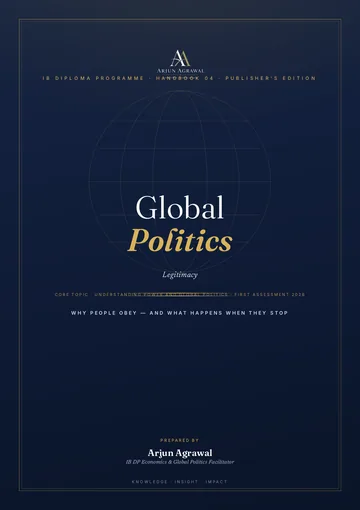 Featured original publicationLegitimacyWhy People Obey — and What Happens When They StopThe core handbook on legitimacy: state and government legitimacy, Weber and Beetham, the guide’s sources and challenges, non-state actors, and legitimacy beyond the state.Preview selected pages
Interactive Knowledge Atlas
Open the AtlasNationalism, and what it connects
Nationalism is the ideology and movement holding that humanity is divided into nations, that the nation is the primary object of political loyalty, and that each nation should govern itself, usually…
04 · The Academic Ecosystem · A network of three platforms
Explore the Arjun Agrawal Academic Ecosystem
Three independent academic platforms, each with its own subject, examinations and learning environment, published under one identity and one standard. Political Studies is the platform you are reading.
Economics
Economics
IB Economics | Economic Analysis | Academic Resources
Economics for IB Diploma Programme students and UPSC CSE aspirants: conceptual understanding, visual learning, real-world applications and examination-focused preparation.
What you will find
- The IB Economics course, unit by unit, and its key concepts
- Examination papers, practice and examiner insight
- Interactive diagrams and calculations
- Internal Assessment guidance
- Economics for UPSC CSE
A diagram-led studio for economic reasoning, from first principles to examination answers.
Visit Economics (opens in a new tab)ib-economics-pi.vercel.app
Business Management
The Business Brief
IB Business Management | Strategy | Leadership | Decisions
A Business Management learning platform with topic notes, mindmaps, case studies, interactive tools and an Assessment Centre for IB Diploma Programme Business Management.
What you will find
- Topic notes and mindmaps for IB Business Management
- Case studies, from the Case Room to the Case Vault
- Interactive decision tools and business diagrams
- An Assessment Centre and Internal Assessment studio
- A glossary of business terms
A newsroom of briefings, cases and decision rooms, where strategy is practised rather than memorised.
Visit The Business Brief (opens in a new tab)the-business-brief-dun.vercel.app
Political Studies
Political Studies & Global Affairs
Indian Polity | International Relations | PSIR | IB Global Politics
UPSC CSE Indian Polity and International Relations, the PSIR Optional and IB DP Global Politics: one connected body of knowledge, read through four pathways.
What you will find
- The Constitution Explorer and Indian Polity & Governance
- India and the World: relationships, groupings and corridors
- The Political Thinkers Atlas and the PSIR Optional
- The IB Global Politics course, concept by concept
- The Global Political Briefing and Political Issue Dossiers
An atlas of maps, texts and ideas, where institutions, thinkers and events are read together.
05About Arjun Agrawal
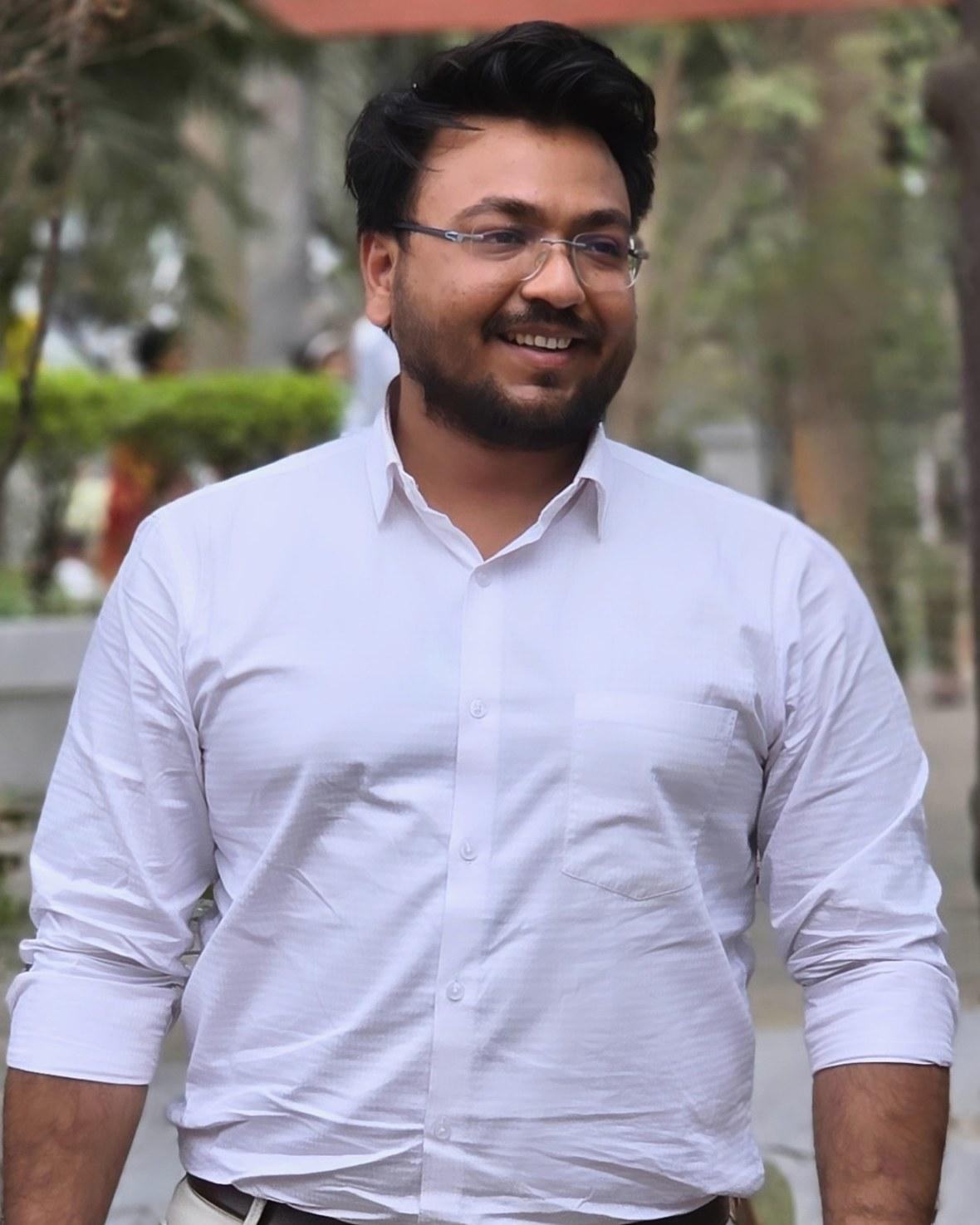
Arjun Agrawal
IB DP Economics & Global Politics Facilitator
An educator and academic resource author working across IB Diploma Programme Global Politics, Economics and Business Management, with a background in Economics from St. Stephen’s College, University of Delhi, and UPSC Civil Services mentorship in Economics. This platform is the third of his academic websites, beside Economics and The Business Brief.
- Education
- Economics
- St. Stephen's College, University of Delhi
- Higher education
- Assistant Professor, undergraduate Economics
- Fergusson College, Pune
- IB Diploma Programme
- Teaching and academic work
- BLISS International School, Pune · Symbiosis International School, Pune
- IB subjects
- Economics · Business Management · Global Politics
- SL and HL